Sarcopenia-related Strength & Function
Progressive resistance training for declining strength, chair transfers and walking. Diagnosis of sarcopenia requires appropriate assessment of strength, muscle mass and function.
Finding it harder to rise from a chair or use stairs, or worried about falls? One-to-one assessment and progressive training support strength, balance and everyday mobility at a pace that suits you.
Enquire About a Personalised Assessment ↗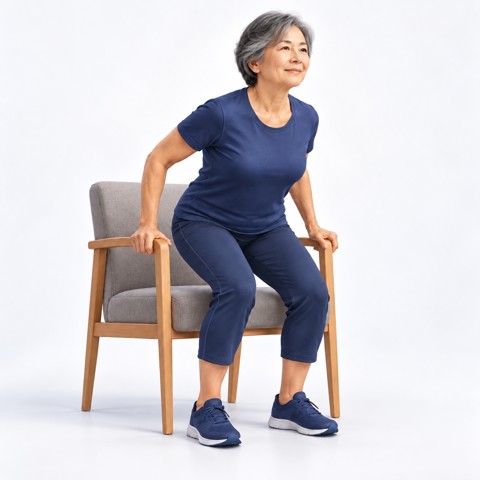
We first understand your situation and goals, then recommend appropriate assessment, treatment or referral.
Following individual assessment, we can offer treatment, exercise or rehabilitation support for:
Progressive resistance training for declining strength, chair transfers and walking. Diagnosis of sarcopenia requires appropriate assessment of strength, muscle mass and function.
Weight-bearing, resistance and balance exercises selected with regard to fracture history, medical advice and ability, supporting bone health and daily activity.
A starting point matched to endurance and health, practising transfers, walking, steps and everyday functional tasks.
Weight shifts, stepping, turning and coordination to build stability and confidence, with attention to home and caregiver support.
Strength and bone health need ongoing care as we age. Individually appropriate resistance and balance training can support mobility and fall prevention. Plans also consider bone health, medical history, medication and recent falls.
Reviewing history, bone health, recent surgery, medication, falls and mobility aids.
Observing chair transfers, walking, steps and upper- and lower-limb effort as appropriate.
Assessing standing, turning, weight shifts and stability during movement.
Understanding the home environment, activity, nutrition and available caregiver support.

Starting with suitable support and load, progressively training hips, legs and other major muscle groups while considering bone health.
Weight shifts, turns, stepping and coordination matched to ability, with stable support and appropriate protection.
Adjusting care and exercise for symptoms, connecting training to getting up, walking and going out.
Angles, support, resistance, repetitions and tempo are adjusted to ability and response. Images are illustrative; specific exercises follow assessment.
How We Assess & Adapt →We review ease of chair transfers, walking, stairs, balance and confidence, helping abilities support independent daily life.
We record treatment, exercises, responses and challenges, using reassessment and team case discussion to guide ongoing adjustments.
Our team has experience in older-adult and community health projects. We value understanding and participation, with one-to-one care allowing time for explanation, demonstration and supported practice.
An assessment establishes a suitable starting point. Load and volume increase gradually according to health and ability; heavy weights are not required at the start.
Plans are individualised and may incorporate medical advice. Movement, load and support depend on fracture history, symptoms and ability.
Please mention this when booking. Where helpful, family can learn the exercises and ways to support practice at home.
We discuss general diet and lifestyle. For individual nutrition treatment or supplement advice, we recommend a doctor or registered dietitian.
Share your situation and ask about assessment, service arrangements and fees.
WhatsApp Booking / Enquiries ↗PROFLEX Sports Therapy & Physiotherapy Centre
4A, Wo On House, 8–13 Wo On Lane, Central
+852 9838 4019
Daily & Public Holidays 09:00–21:00 | By appointment