Scoliosis-related Functional Support
Working alongside medical diagnosis and monitoring to understand trunk movement, strength and daily function. Exercise does not replace bracing, medical follow-up or necessary specialist care.
Concerned about rounded shoulders, kyphosis, asymmetry or a child's posture and movement? Assessment and engaging, achievable practice are tailored to age, ability and practical needs.
Enquire About a Personalised Assessment ↗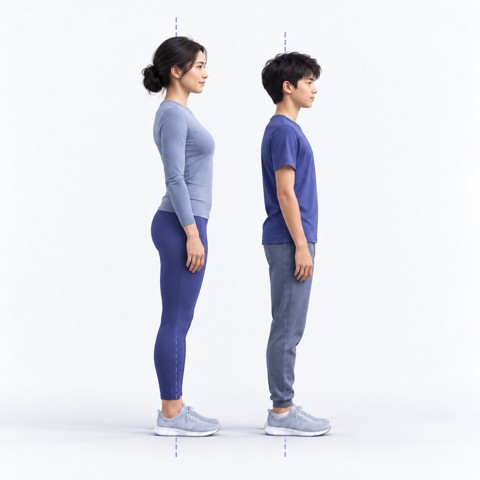
We first understand your situation and goals, then recommend appropriate assessment, treatment or referral.
Following individual assessment, we can offer treatment, exercise or rehabilitation support for:
Working alongside medical diagnosis and monitoring to understand trunk movement, strength and daily function. Exercise does not replace bracing, medical follow-up or necessary specialist care.
Assessing thoracic mobility, scapular control and trunk strength in the context of work or study. Appearance alone does not establish the cause of symptoms.
Observing arm elevation, loading and whole-body coordination, with scapular, core and movement-control practice as needed.
Age-appropriate, engaging activities for body awareness, strength and movement learning, with parental and everyday support.
Normal differences in appearance do not necessarily indicate injury or future pain. Scoliosis cannot simply be attributed to sitting or schoolbags. Concerns are addressed alongside medical assessment and follow-up.
Reviewing development, history, diagnoses and changes that concern the individual or parents.
Observing alignment and movement as appropriate, beyond static photographs.
Age-appropriate tasks to understand trunk, scapular and lower-limb coordination.
Considering desks, electronic devices, schoolbags and activity time.
Accessible demonstrations that help adults and children understand their bodies.
Balance, coordination and strength practice shaped around interests and ability, building habits through encouragement.
Practical activity advice and parental involvement where helpful.
Angles, support, resistance, repetitions and tempo are adjusted to ability and response. Images are illustrative; specific exercises follow assessment.
How We Assess & Adapt →We review mobility, endurance, coordination and daily comfort, valuing children's participation and confidence rather than appearance alone.
We record treatment, exercises, responses and challenges, using reassessment and team case discussion to guide ongoing adjustments.
Yes. It can explore movement, control and daily needs, and whether training or further follow-up would help.
No guarantee can be made. Type, severity and growth stage matter. Exercise may support function but does not replace medical monitoring or other care.
We adapt to age, interests and ability, using simple challenges, demonstrations and encouragement.
Share your situation and ask about assessment, service arrangements and fees.
WhatsApp Booking / Enquiries ↗PROFLEX Sports Therapy & Physiotherapy Centre
4A, Wo On House, 8–13 Wo On Lane, Central
+852 9838 4019
Daily & Public Holidays 09:00–21:00 | By appointment